Welcome to NEMETODE
Network for Meteor
Triangulation and Orbit Determination
NEMETODE is a network of cameras based in the north of England that monitor the night sky for meteors ("shooting stars"). Through the use of triangulation and timing the network is able to determine the actual trajectory and velocity of the meteoroid through the Earth's atmosphere. From this information scientifically valuable results can then be derived such as:
A more accurate determination of the radiant (that point in the sky from which the meteor appeared to originate).
How the position of the radiant varies with time.
An estimate of the original orbit of the meteoroid around the sun (before the Earth got in the way).
As NEMETODE celebrates its first birthday as a fully operational multi-station group, we thought it would be a good time to look back on our results over the past twelve months. As many of you will know, the weather in the latter half of 2012 was somewhat less than ideal and this had a significant impact on the quality and quantity of detections over the busiest time of the year for shower meteors.
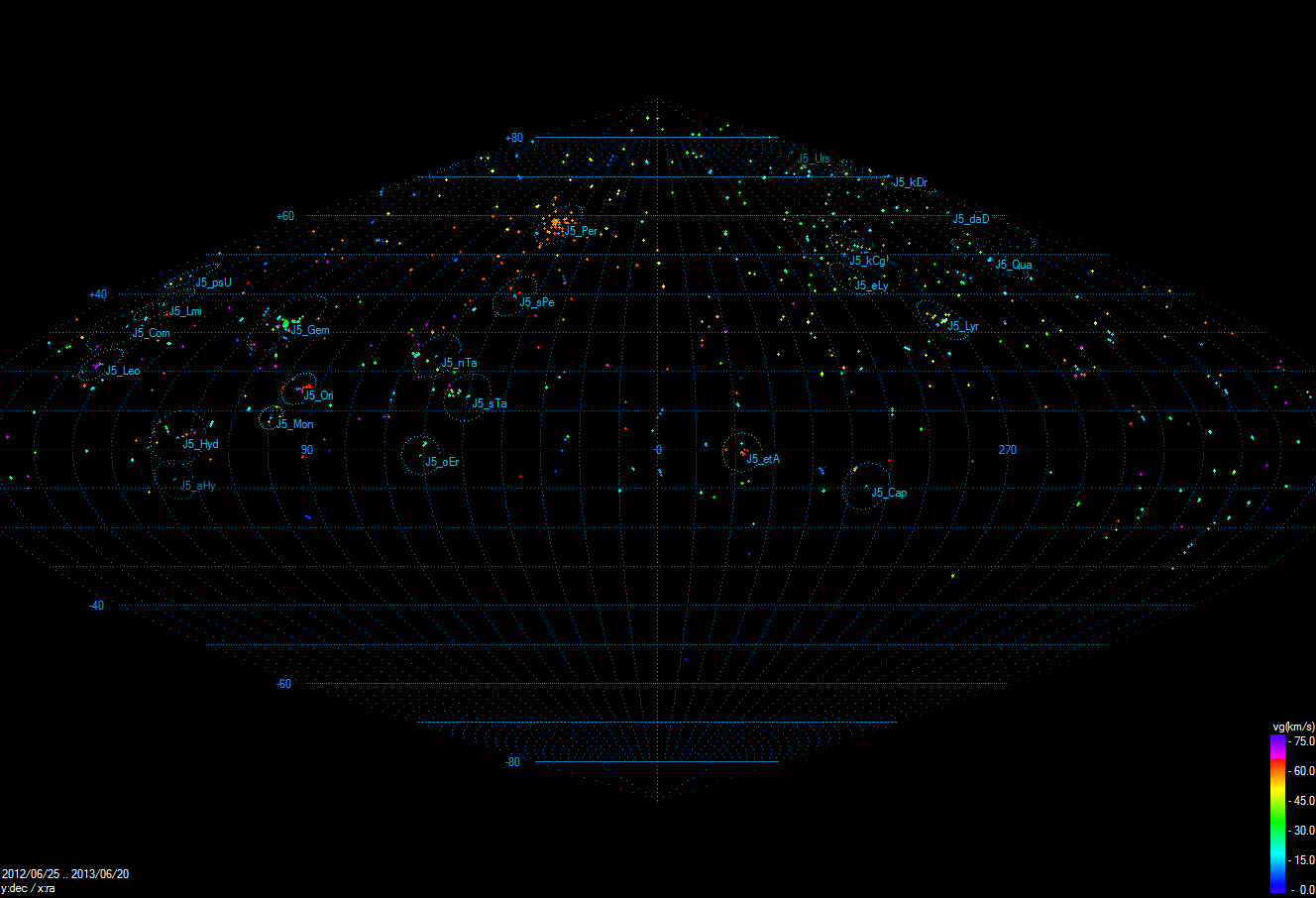
Each dot on the plot below shows the triangulated radiant position of a meteor that was simultaneously observed from at least one NEMETODE camera since the multi-station collaboration commenced. The colour indicates the geocentric velocity such as the speedy Perseids (orange dots, above and to the left of centre), the even faster Orionids and eta Aquarids (red dots) and the relatively slow Geminids and Taurids (green dots). The random (unclustered) dots are from sporadic meteors. No dots are apparent in the lower third of the plot as that part of the sky never rises above the horizon as viewed from the British Isles.
With additional cameras coming online and the hope of clearer skies (compared to 2012) we expect to add significantly to our dataset over the coming months.
All images and videos are available for individual personal use. The copyright resides with the authors and their written permission must be obtained in advance of any public and / or commercial use.
|
 |
The capture software used by NEMETODE is based on the principle of motion detection - as a consequence the cameras can be triggered not just by meteors but also by other moving or changing objects within the field of view. At this time of year we have various forms of nocturnal wildlife such as this example from Leeds passing through Scutum or this one from Ravenmoor passing through the Great Square of Pegasus ... a possible confirmation of the bata Pegasids?
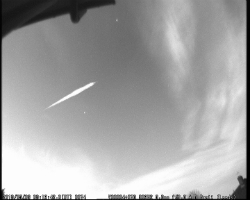
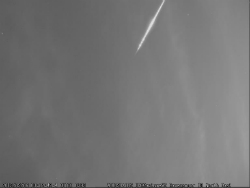
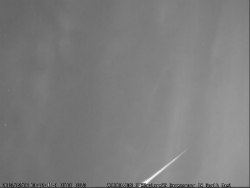
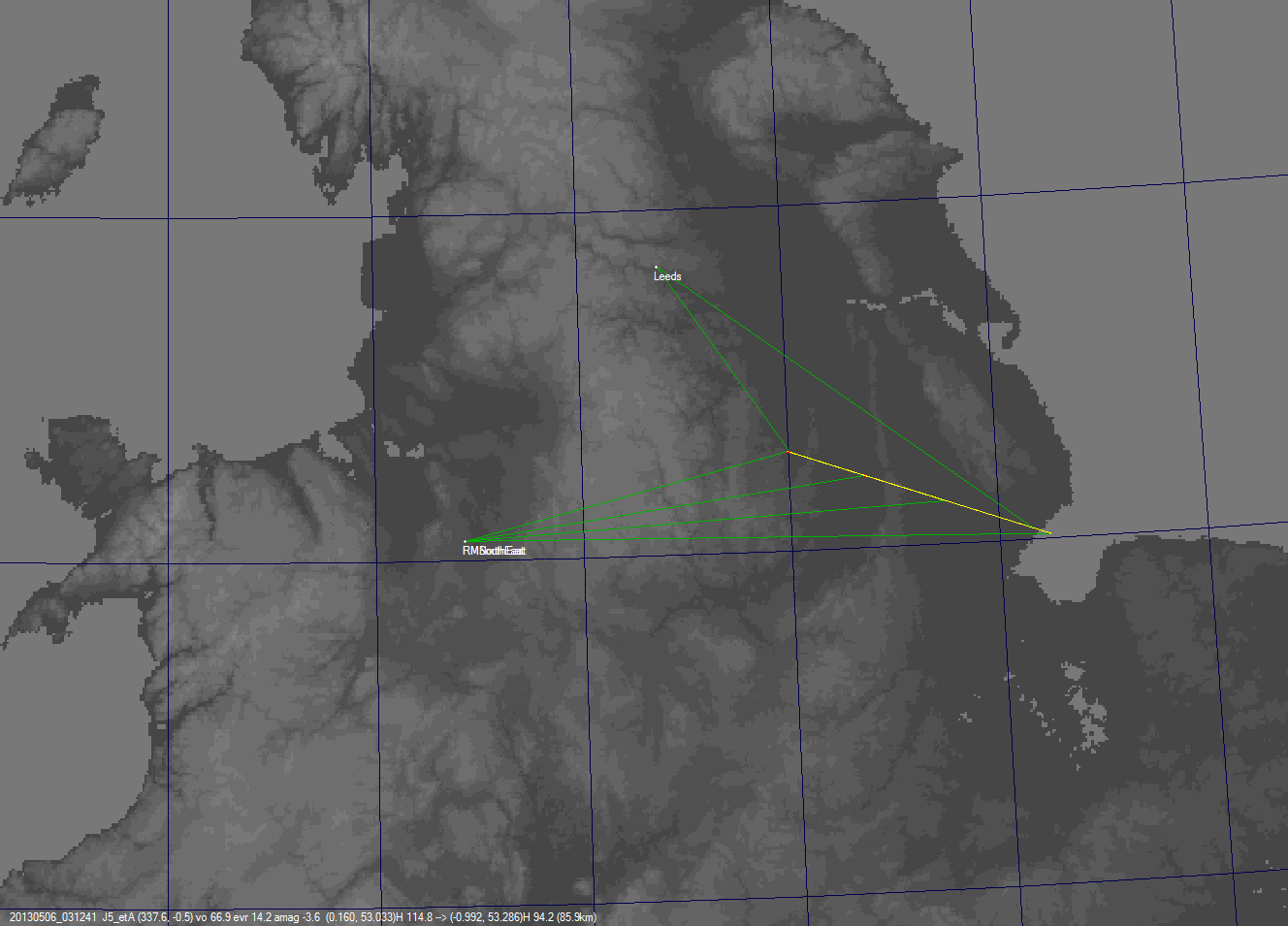
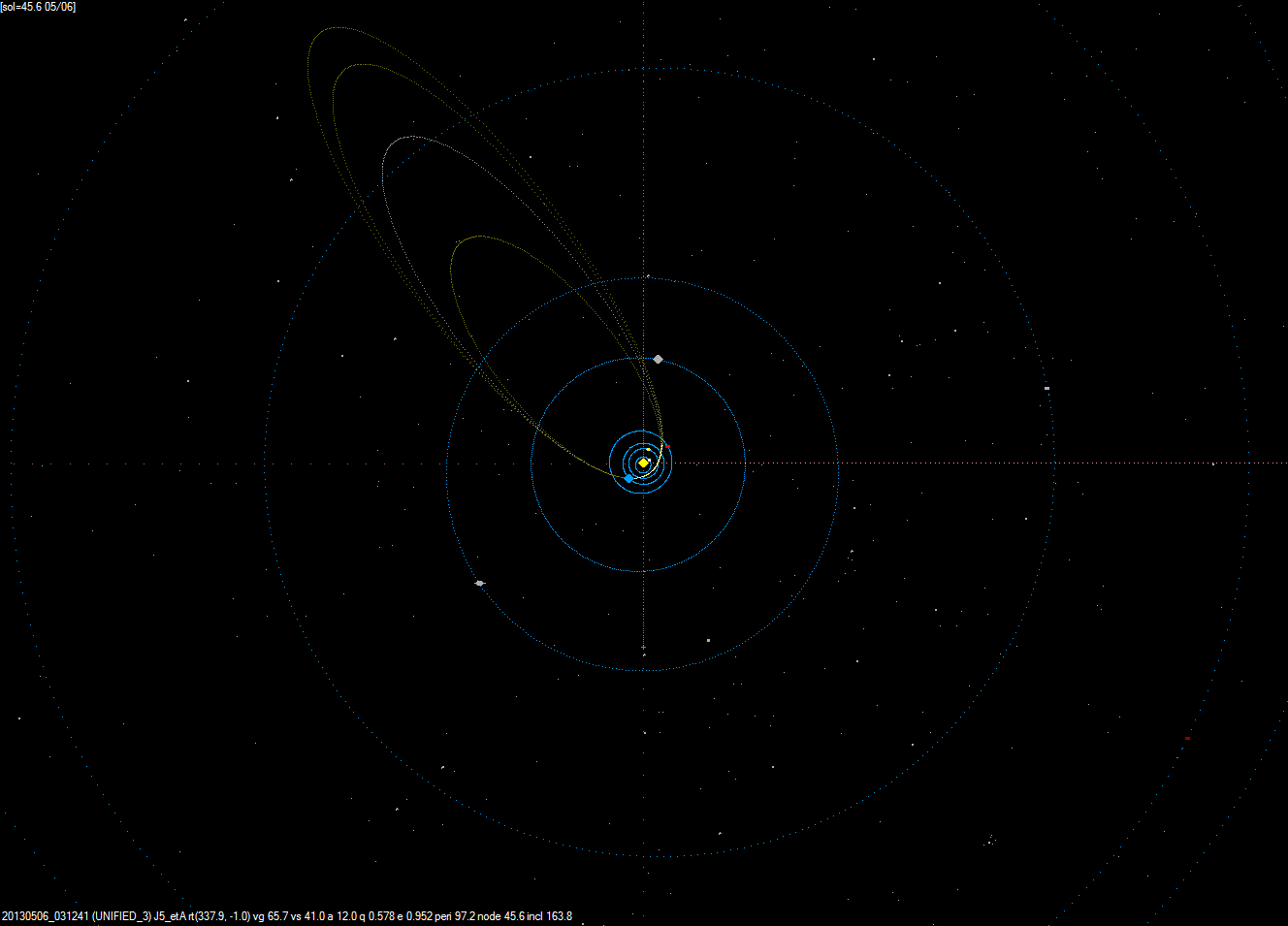
The 2013 eta Aquarid shower was well observed and may be the subject of an upcoming paper. The images / videos below are typical of the results obtained. Not many stars are visible as the radiant (the point in the sky from which the meteors appear to originate) rises above the horizon shortly before sunrise - as a consequence the meteors are viewed in the morning twilight. The fact that they are visible under such circumstances indicates just how bright these remnants of Halley's comet actually are. The top image shows the view from Leeds while the middle row of images shows the view from each of the Ravensmoor cameras. Note that both of the Ravensmoor cameras have been rotated clockwise through 90 degrees within their housings in order to minimise local overlap (see Nodes) and so what appears to be the bottom of the field of view is actually the left hand side. The derived ground track and orbit is shown on the bottom row. Click on images for videos / larger versions.
 |
|||
 |
 |
||
 |
 |
||
|
All images and videos are available for individual personal use. The copyright resides with the authors and their written permission must be obtained in advance of any public and / or commercial use. |
|||